 Really Big Coloring Books
 Really Big Coloring Books
 Really Big Coloring Books
Our Affiliation Partners
-

Really Big Coloring Books® member Library of Congress Copyright Office Books and Music





-
Click for information about:
Jingles | Custom Songs | Band -

Member of the Missouri Press Association


-

82277
-

649013
-

50277


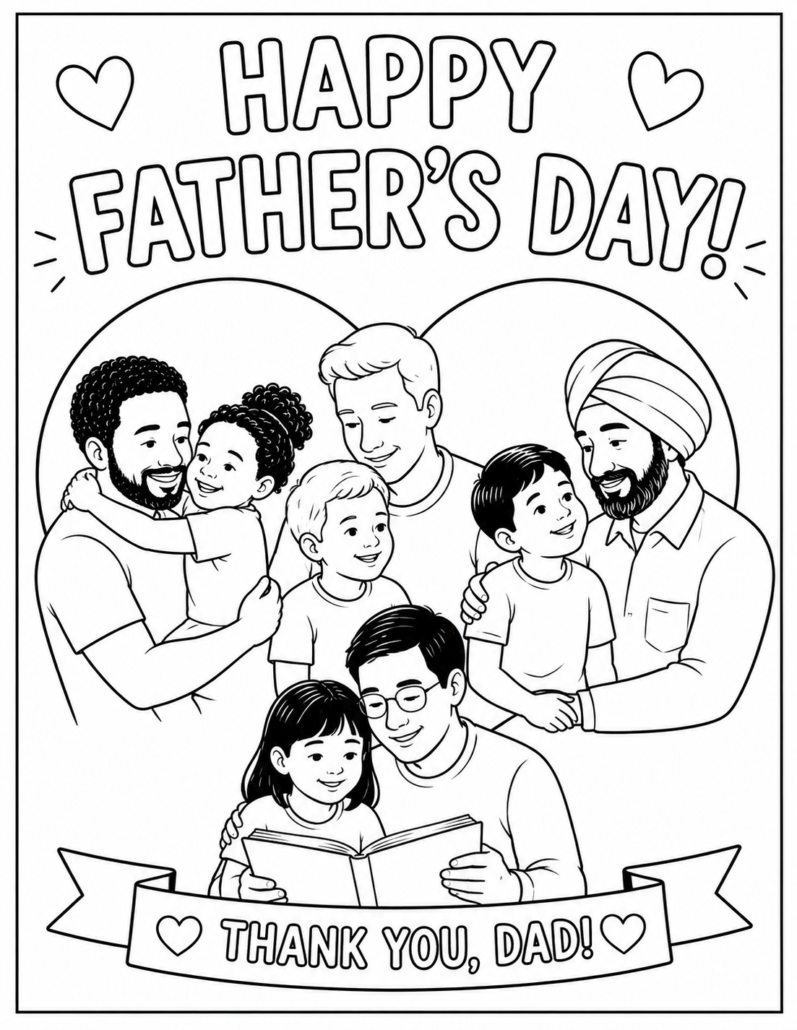
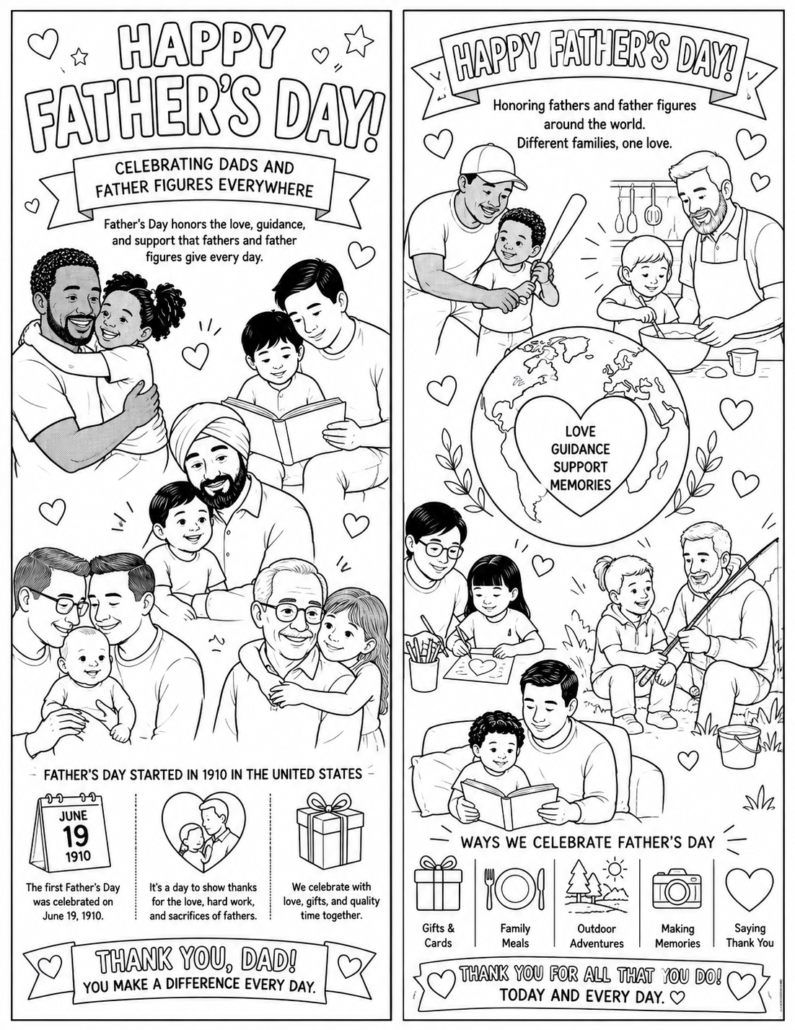
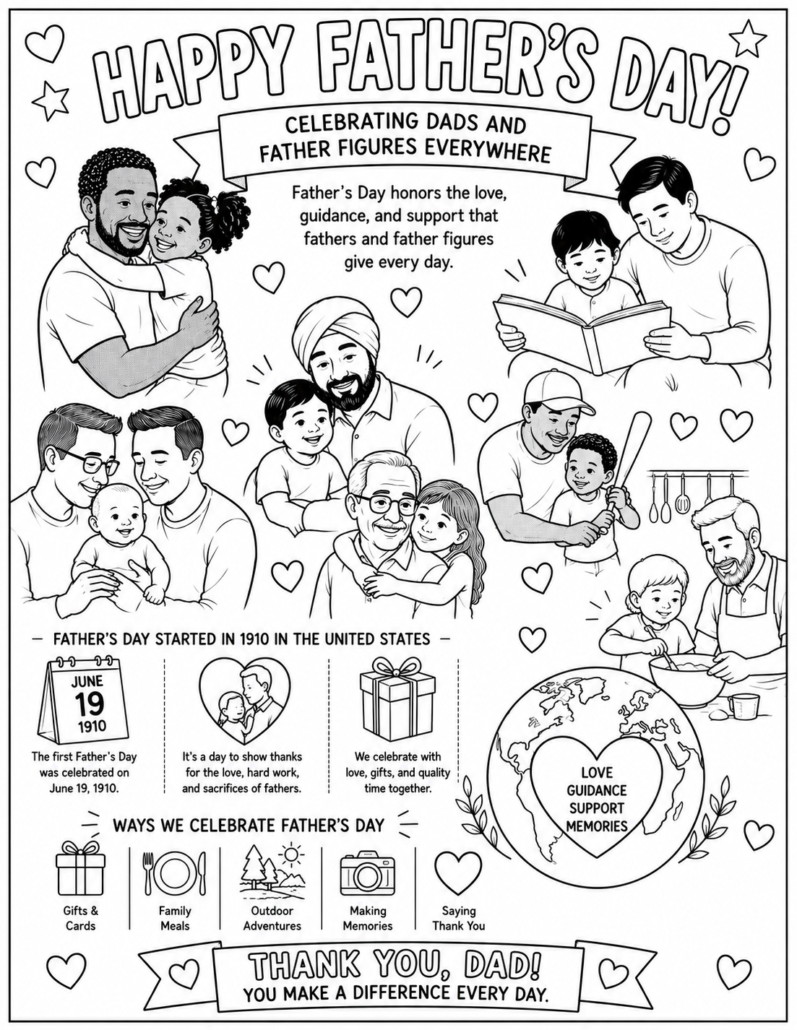
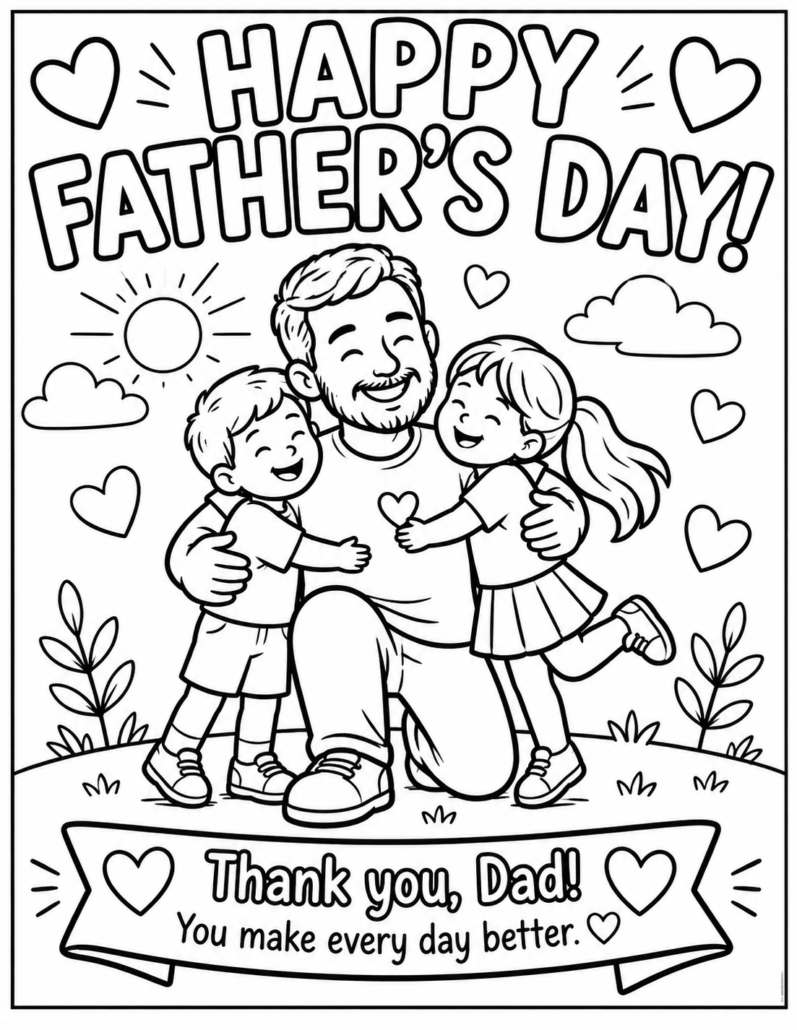
The History and Meaning of Father’s Day
Father’s Day is a special celebration honoring fathers and father figures for their contributions to families and society. The holiday recognizes the love, guidance, and support that fathers provide throughout their lives. The tradition started in the United States.
Really Big Coloring Books® and ColoringBook.com are happy to provide free Father’s Day Coloring pages for all ages. If you want a free coloring page for your special day, just email or call ColoringBook.com.
The modern Father’s Day tradition began in the United States in 1910. Sonora Smart Dodd of Spokane, Washington, proposed the idea to honor her father, William Jackson Smart, a Civil War veteran who single-handedly raised six children. The first Father’s Day was celebrated on June 19, 1910. In 1972, President Richard Nixon officially declared Father’s Day a national holiday, observed annually on the third Sunday of June.
Today, Father’s Day is celebrated worldwide through family gatherings, special meals, greeting cards, gifts, and quality time spent together. While traditions vary by country, the purpose remains the same: to show appreciation for fathers and father figures who have made a positive impact on our lives.
Sources:
Father’s Day is a special occasion dedicated to honoring fathers, father figures, and the important role they play in families and society. Celebrated annually in many countries around the world, Father’s Day is a time to recognize the love, guidance, support, and sacrifices that fathers provide throughout their lives.
The modern Father’s Day celebration originated in the United States in the early 20th century. The idea is widely credited to Sonora Smart Dodd of Spokane, Washington. Inspired by the success of Mother’s Day, Dodd wanted to honor her father, William Jackson Smart, a Civil War veteran who raised six children as a single parent.
The first Father’s Day was celebrated on June 19, 1910, in Spokane, Washington. Over the following decades, the observance gained popularity across the nation. In 1972, President Richard Nixon officially designated Father’s Day as a national holiday in the United States, to be celebrated on the third Sunday of June each year.
Father’s Day is more than just giving gifts. It serves as an opportunity to express gratitude for fathers’ contributions to their families and communities. The day highlights the importance of fatherhood, parental bonds, and positive male role models.
Today, Father’s Day is celebrated in various ways around the world. Common traditions include:
Whether through a simple phone call, a heartfelt message, or a family celebration, Father’s Day reminds us to appreciate the fathers and father figures who have helped shape our lives.
Sources:
Really Big Coloring Books® member Library of Congress Copyright Office Books and Music
Click for information about:
Jingles | Custom Songs | Band
Member of the Missouri Press Association
82277
649013
50277
 Really Big Coloring Books
 Really Big Coloring BooksAI Coloring Books